پیام خود را بنویسید

XML English Abstract Print


1- دانشگاه خلیج فارس
چکیده:   (53 مشاهده)
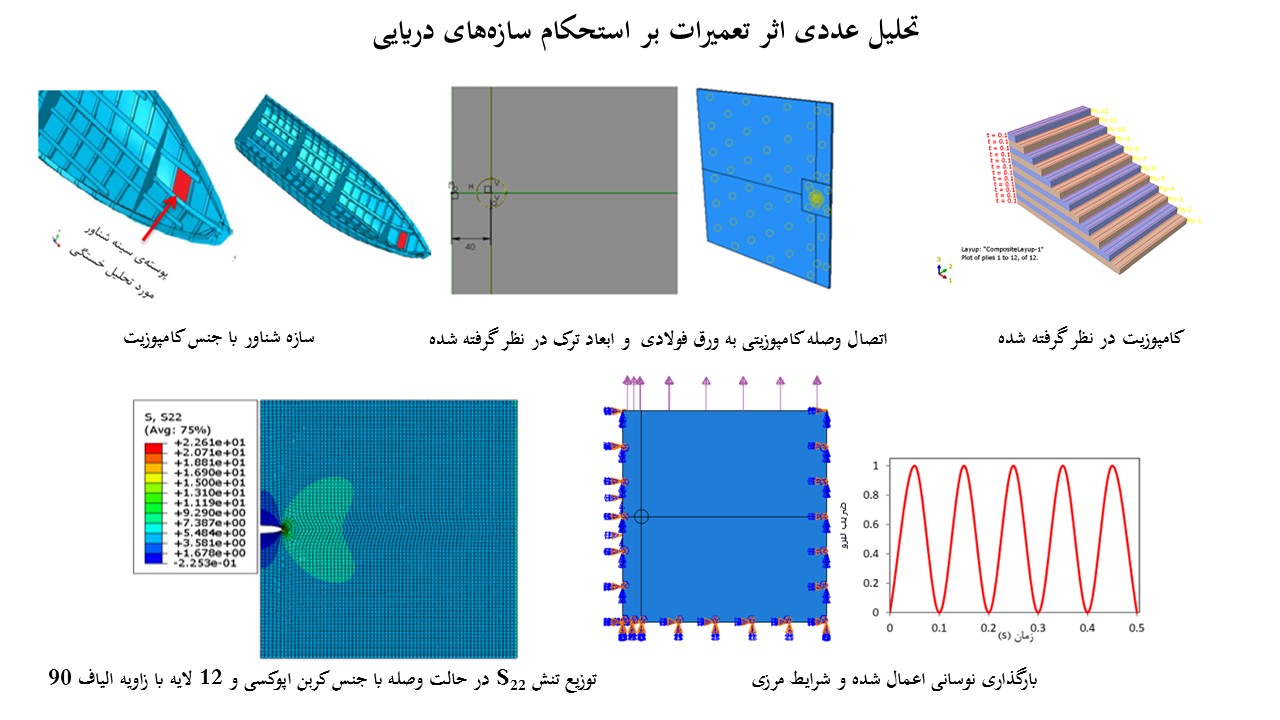
ترک‌های ایجادشده در ورق‌های فولادی، به‌ویژه در سازه‌های دریایی و صنعتی، از عوامل اصلی کاهش استحکام و ایمنی سازه‌ها محسوب می‌شوند. ترمیم مؤثر چنین آسیب‌هایی نقش مهمی در افزایش طول عمر و بهبود قابلیت اطمینان سازه دارد. ازاین‌رو، پژوهش حاضر با هدف بررسی عملکرد وصله‌های کامپوزیتی در ترمیم ترک‌های ورق فولادی و بهبود رفتار شکست آن‌ها انجام شده استدر این تحقیق، تحلیل عددی به کمک نرم‌افزار Abaqus و روش انتگرال J انجام شد تا اثر ویژگی‌های مختلف وصله‌های کامپوزیتی بر رفتار مکانیکی بررسی شود. متغیرهای اصلی شامل جنس وصله (کربناپوکسی و الیاف شیشه‌ای)، ضخامت (۰.۴، ۰.۵، ۰.۶ و ۱.۲ میلی‌متر) و زاویه الیاف (۰، ۴۵ و ۹۰ درجه) بودند. مدل‌سازی و شبیه‌سازی برای حالت‌های یک‌طرفه و دوطرفه انجام شد و پارامترهایی همچون ضریب شدت تنش (K)، تنش محوری (S22) و بازشدگی نوک ترک (COD) مورد ارزیابی قرار گرفتند. نوآوری پژوهش در مقایسه سیستماتیک اثر جنس، ضخامت و زاویه الیاف وصله‌ها در قالب یک تحلیل سه‌بعدی جامع و ارزیابی دقیق کاهش تنش‌ها و تغییر شکل نوک ترک نهفته است. 
یافته‌ها نشان داد که وصله‌های کربناپوکسی نسبت به وصله‌های الیاف شیشه‌ای کارایی بیشتری در کاهش ضریب شدت تنش و بازشدگی نوک ترک دارند. همچنین، افزایش ضخامت وصله و قرارگیری الیاف در زاویه ۹۰ درجه نسبت به راستای بارگذاری، بیشترین کاهش در K و S22 را ایجاد کرد. علاوه بر این، وصله‌های دوطرفه عملکرد بهتری نسبت به وصله‌های یک‌طرفه در کاهش تنش‌ها نشان دادند. بر اساس نتایج، می‌توان توصیه کرد که در کاربردهای صنعتی، به‌ویژه در محیط‌های دریایی، استفاده از وصله‌های کربناپوکسی با ضخامت بیشتر و آرایش الیاف در راستای ۹۰ درجه گزینه‌ای بهینه برای ترمیم و افزایش دوام ورق‌های فولادی ترک‌دار است.
متن کامل [PDF 979 kb]   (25 دریافت)    

نکات برجسته:
  1. تحلیل جامع سه‌بعدی اثر ویژگی‌های وصله‌های کامپوزیتی (جنس، ضخامت، زاویه الیاف و تک‌یا دوطرفه بودن) بر رفتار مکانیکی ورق‌های فولادی ترک‌دار در سازه‌های دریایی با استفاده از شبیه‌سازی در نرم‌افزار آباکوس.
  2. تعیین بهینه‌ترین پارامترهای ترمیم: شناسایی وصله‌های کربن-اپوکسی با ضخامت بیشتر (۱.۲ میلی‌متر) و زاویه الیاف ۹۰ درجه (هم‌راستا با بار) به عنوان مؤثرترین حالت در کاهش ضریب شدت تنش (K)، تنش محوری (S22) و بازشدگی نوک ترک (COD).
  3. ارزیابی برتری وصله‌های دوطرفه: اثبات عملکرد برتر وصله‌های نصب‌شده در دو طرف ورق نسبت به وصله‌های تک‌طرفه در کاهش قابل‌توجه پارامترهای تنشی و بهبود یکنواختی توزیع بار.
  4. کمی‌سازی بهبود عملکرد: ارائه نتایج کمی که نشان می‌دهد بهینه‌ترین وصله (کربن-اپوکسی، دوطرفه، ۱.۲ میلی‌متر، ۹۰ درجه) توانسته ضریب شدت تنش (K) را تا ۲۶.۹۴٪ و تنش محوری (S22) را تا ۲۲.۷۶٪ کاهش دهد.
  5. ارائه راهکار عملی برای صنعت: پیشنهاد استفاده از وصله‌های کامپوزیتی کربن-اپوکسی با ضخامت مناسب و آرایش الیاف ۹۰ درجه به عنوان یک روش بهینه برای ترمیم و افزایش طول عمر سازه‌های فولادی ترک‌دار، به‌ویژه در محیط‌های دریایی.

 
نوع مطالعه: مقاله پژوهشي | موضوع مقاله: سازه کشتی
دریافت: 1404/7/9 | پذیرش: 1404/10/16

فهرست منابع
1. Baker, A., Bonded repair of aircraft structures. Vol. 7. 1988: Springer Science & Business Media. [DOI:10.1007/978-94-009-2752-0]
2. Rose, L., An application of the inclusion analogy for bonded reinforcements. International Journal of Solids and Structures, 1981. 17(8): p. 827-838. [DOI:10.1016/0020-7683(81)90091-3]
3. Pipkins, D. and S. Atluri, A FEAM Based Methodology for Analyzing Composite Patch Repairs of Metallic Structures. Composite Repair of Military Aircraft Structures, 1995.
4. Bottega, W. and M. Loia, Edge debonding in patched cylindrical panels. International journal of solids and structures, 1996. 33(25): p. 3755-3777. [DOI:10.1016/0020-7683(95)00205-7]
5. Denney, J.J., Fatigue Response of Cracked Aluminum Panel With Partially Bonded Composite Patch. 1995. [DOI:10.2514/6.1996-1322]
6. Mohammadi, R., M. Ahmadi Najafabadi, and H. Hosseini Toudeshky, Investigation of failure mechanisms of notched aluminum plates repaired with composite patches using acoustic emission method. Modares Mechanical Engineering, 2017. 17(8): p. 406-412.
7. Xiong, J. and R. Shenoi, Integrated experimental screening of bonded composites patch repair schemes to notched aluminum-alloy panels based on static and fatigue strength concepts. Composite Structures, 2008. 83(3): p. 266-272. [DOI:10.1016/j.compstruct.2007.04.019]
8. Chue, C.-H., W.-C. Chou, and T.J.-C. Liu, The effects of size and stacking sequence of composite laminated patch on bonded repair for cracked hole. Applied Composite Materials, 1996. 3(6): p. 355-367. [DOI:10.1007/BF00133679]
9. Bouiadjra, B.B., et al., SIF for inclined cracks repaired with double and single composite patch. Mechanics of Advanced Materials and Structures, 2007. 14(4): p. 303-308. [DOI:10.1080/15376490600845454]
10. Kaddour, S., et al., Analysis of crack propagation by bonded composite for different patch shapes repairs in marine structures: a numerical analysis. International Journal of Engineering Research in Africa, 2018. 35: p. 175-184. [DOI:10.4028/www.scientific.net/JERA.35.175]
11. Zouambi, L., et al., J-integral evaluation of repaired cracks in AA7075-T6 structures subjected to uniaxial tensile stresses. Polymer Testing, 2019. 77: p. 105874. [DOI:10.1016/j.polymertesting.2019.04.021]
12. Msekh, M.A., et al., Fracture properties prediction of clay/epoxy nanocomposites with interphase zones using a phase field model. Engineering Fracture Mechanics, 2018. 188: p. 287-299. [DOI:10.1016/j.engfracmech.2017.08.002]
13. Barghamdi, et al., Investigating the effect of size and amount of amorphous nano-silica particles on the fracture toughness of dental resin composites. Journal of Research in Dental Sciences, 2018. 15(1): p. 5-12. [DOI:10.29252/jrds.15.1.5]
14. Hart, D.C. and H.A. Bruck, Predicting failure of cracked aluminum plates with one-sided composite patch. International Journal of Fracture, 2021. 227(2). [DOI:10.1007/s10704-020-00509-4]
15. Li, Z., X. Jiang, and H. Hopman, External surface cracked offshore pipes reinforced with composite repair system: A numerical analysis. Theoretical and Applied Fracture Mechanics, 2022. 117: p. 103191. [DOI:10.1016/j.tafmec.2021.103191]
16. Berrahou, M. and K. Amari, Numerical analysis of the repair performance of Notched Cracked Composite Structure repaired by composite patch. Journal of Materials and Engineering Structures «JMES», 2022. 9(3): p. 317-326.
17. Jassam, Z.N. and R.M. Laftah, Investigation of Stress Intensity Factor Reduction using Steel and GFRP Patches for Repairing Edge Cracks in Steel Plates. 2024.
18. Naderian and K. Attabadi, Implementation of an algorithm for estimating the fatigue life of a high-speed floating composite shell under oscillating sea pressure load. Marine Engineering Scientific Research Journal, 2020. 16(32): p. 107-117. [DOI:10.29252/marineeng.16.32.107]
19. Kathiresan, M., K. Manisekar, and V. Manikandan, Performance analysis of fibre metal laminated thin conical frusta under axial compression. Composite Structures, 2012. 94(12): p. 3510-3519. [DOI:10.1016/j.compstruct.2012.05.026]
20. Liu, M., et al., An improved semi-analytical solution for stress at round-tip notches. Engineering fracture mechanics, 2015. 149: p. 134-143 [DOI:10.1016/j.engfracmech.2015.10.004]

ارسال پیام به نویسنده مسئول


بازنشر اطلاعات
Creative Commons License این مقاله تحت شرایط Creative Commons Attribution-NonCommercial 4.0 International License قابل بازنشر است.

Creative Commons License
International Journal of Maritime Technology is licensed under a

Creative Commons Attribution-NonCommercial 4.0 International License.